
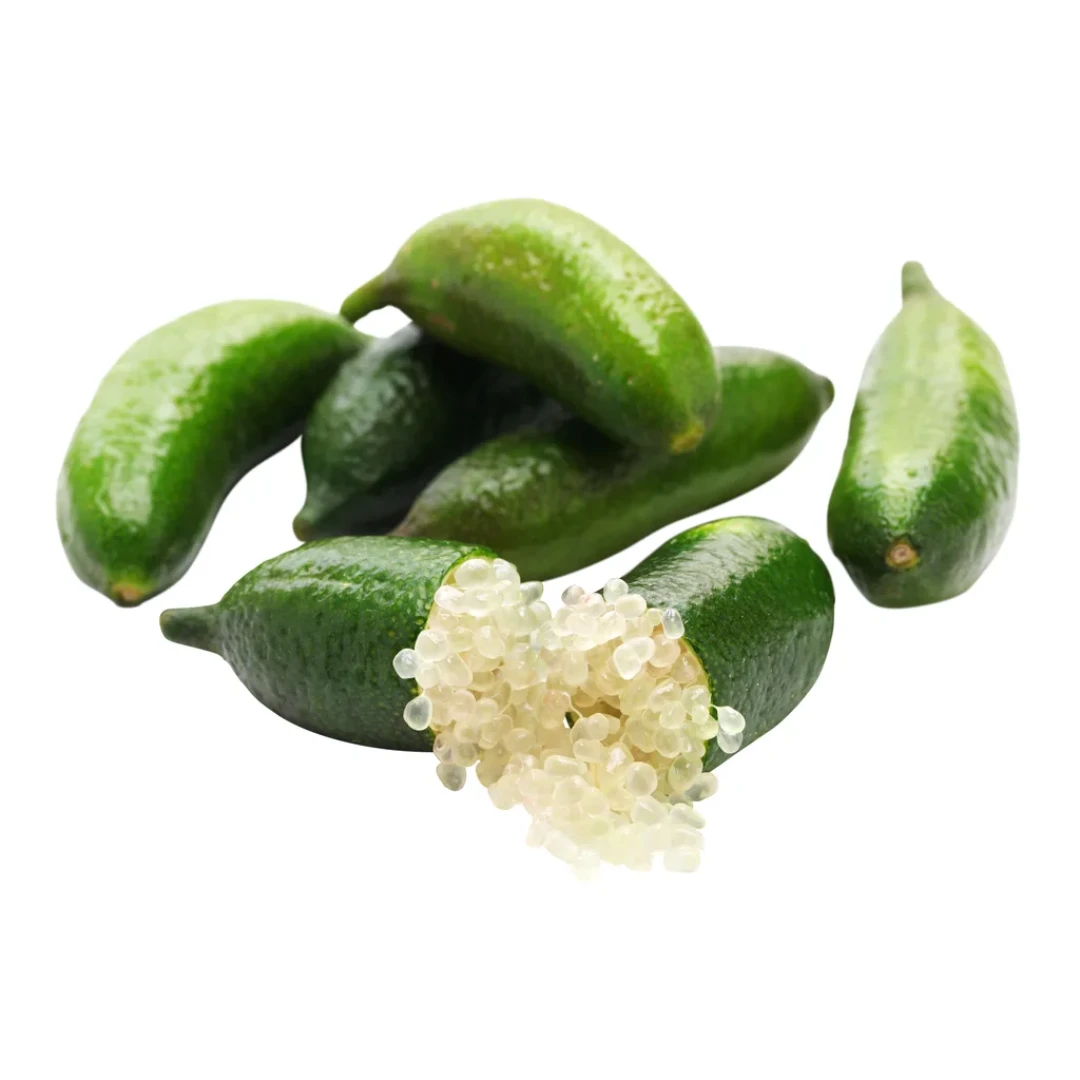
KYABIA RAIMU - CAVIAR FINGER LIME – Citrus australasica
Description
フィンガーライム KYABIA RAIMU - CAVIAR FINGER LIME – Citrus australasica
Texture/Flavor Profile
Finger limes contain tiny, jewel-like vesicles that burst with a bright, tangy citrus snap. The texture resembles caviar, offering crisp beads that roll on the palate before releasing their aromatic lime flavor. Their acidity is sharper and more fragrant than conventional limes, with hints of herbal notes and subtle sweetness. This unique structure adds both visual elegance and refreshing brightness to any dish.
Availability/Seasonality
Primarily harvested in Australia, finger limes are available from late summer through early winter depending on region and variety. Their growing cycle is influenced by heat, rainfall, and specific microclimates within subtropical groves. Limited global production means supply fluctuates, and exports often follow seasonal peaks. Frozen or chilled pulp can extend usability, but fresh fruit remains the most prized format.
About
Native to the rainforests of eastern Australia, the finger lime—Citrus australasica—was traditionally foraged by Indigenous communities long before entering modern cuisine. Its long, slender shape and vibrant pearls quickly caught the attention of chefs seeking new textures for seafood and desserts. Today, finger limes are cultivated with care in specialized orchards, each fruit containing thousands of tiny vesicles that resemble citrus caviar. Their rise in Japanese and international kitchens highlights a broader appreciation for ingredients that combine rarity, beauty, and sensory impact.
Preparation
Slice the fruit lengthwise and gently squeeze to release the pearls. Spoon over oysters, sashimi, or ceviche for a fresh burst of acidity. Add to cocktails or sparkling beverages for dramatic visual effect. The citrus beads blend well with creamy desserts, panna cotta, and sorbets. Avoid heating directly, as high temperatures can break down the pearls and diminish their signature pop. Instead, add them just before serving to maintain clarity and texture.
Nutritional Value
Finger limes provide vitamin C, antioxidants, and small amounts of folate and potassium. Their natural acidity supports digestion and enhances flavor without added salt or sugar. The vesicles contain dietary fiber, making them a light, refreshing complement to seafood and fresh vegetable dishes.
Selection and Storage
Choose firm fruit with glossy skin and no soft spots. Store fresh finger limes refrigerated at 4–7°C, where they maintain quality for several weeks. For longer storage, freeze whole fruit; the pearls retain their texture once thawed. Keep cut fruit in an airtight container and use within a few days to preserve aroma and brightness.
Summary
フィンガーライム (Kyabia Raimu) brings visual charm and vibrant acidity to modern cuisine. Its caviar-like pearls enhance seafood, cocktails, and desserts with texture and fragrance. Rare, versatile, and naturally striking, finger lime offers an elegant citrus accent that transforms simple dishes into refined culinary experiences.
Texture/Flavor Profile
Finger limes contain tiny, jewel-like vesicles that burst with a bright, tangy citrus snap. The texture resembles caviar, offering crisp beads that roll on the palate before releasing their aromatic lime flavor. Their acidity is sharper and more fragrant than conventional limes, with hints of herbal notes and subtle sweetness. This unique structure adds both visual elegance and refreshing brightness to any dish.
Availability/Seasonality
Primarily harvested in Australia, finger limes are available from late summer through early winter depending on region and variety. Their growing cycle is influenced by heat, rainfall, and specific microclimates within subtropical groves. Limited global production means supply fluctuates, and exports often follow seasonal peaks. Frozen or chilled pulp can extend usability, but fresh fruit remains the most prized format.
About
Native to the rainforests of eastern Australia, the finger lime—Citrus australasica—was traditionally foraged by Indigenous communities long before entering modern cuisine. Its long, slender shape and vibrant pearls quickly caught the attention of chefs seeking new textures for seafood and desserts. Today, finger limes are cultivated with care in specialized orchards, each fruit containing thousands of tiny vesicles that resemble citrus caviar. Their rise in Japanese and international kitchens highlights a broader appreciation for ingredients that combine rarity, beauty, and sensory impact.
Preparation
Slice the fruit lengthwise and gently squeeze to release the pearls. Spoon over oysters, sashimi, or ceviche for a fresh burst of acidity. Add to cocktails or sparkling beverages for dramatic visual effect. The citrus beads blend well with creamy desserts, panna cotta, and sorbets. Avoid heating directly, as high temperatures can break down the pearls and diminish their signature pop. Instead, add them just before serving to maintain clarity and texture.
Nutritional Value
Finger limes provide vitamin C, antioxidants, and small amounts of folate and potassium. Their natural acidity supports digestion and enhances flavor without added salt or sugar. The vesicles contain dietary fiber, making them a light, refreshing complement to seafood and fresh vegetable dishes.
Selection and Storage
Choose firm fruit with glossy skin and no soft spots. Store fresh finger limes refrigerated at 4–7°C, where they maintain quality for several weeks. For longer storage, freeze whole fruit; the pearls retain their texture once thawed. Keep cut fruit in an airtight container and use within a few days to preserve aroma and brightness.
Summary
フィンガーライム (Kyabia Raimu) brings visual charm and vibrant acidity to modern cuisine. Its caviar-like pearls enhance seafood, cocktails, and desserts with texture and fragrance. Rare, versatile, and naturally striking, finger lime offers an elegant citrus accent that transforms simple dishes into refined culinary experiences.