
Description
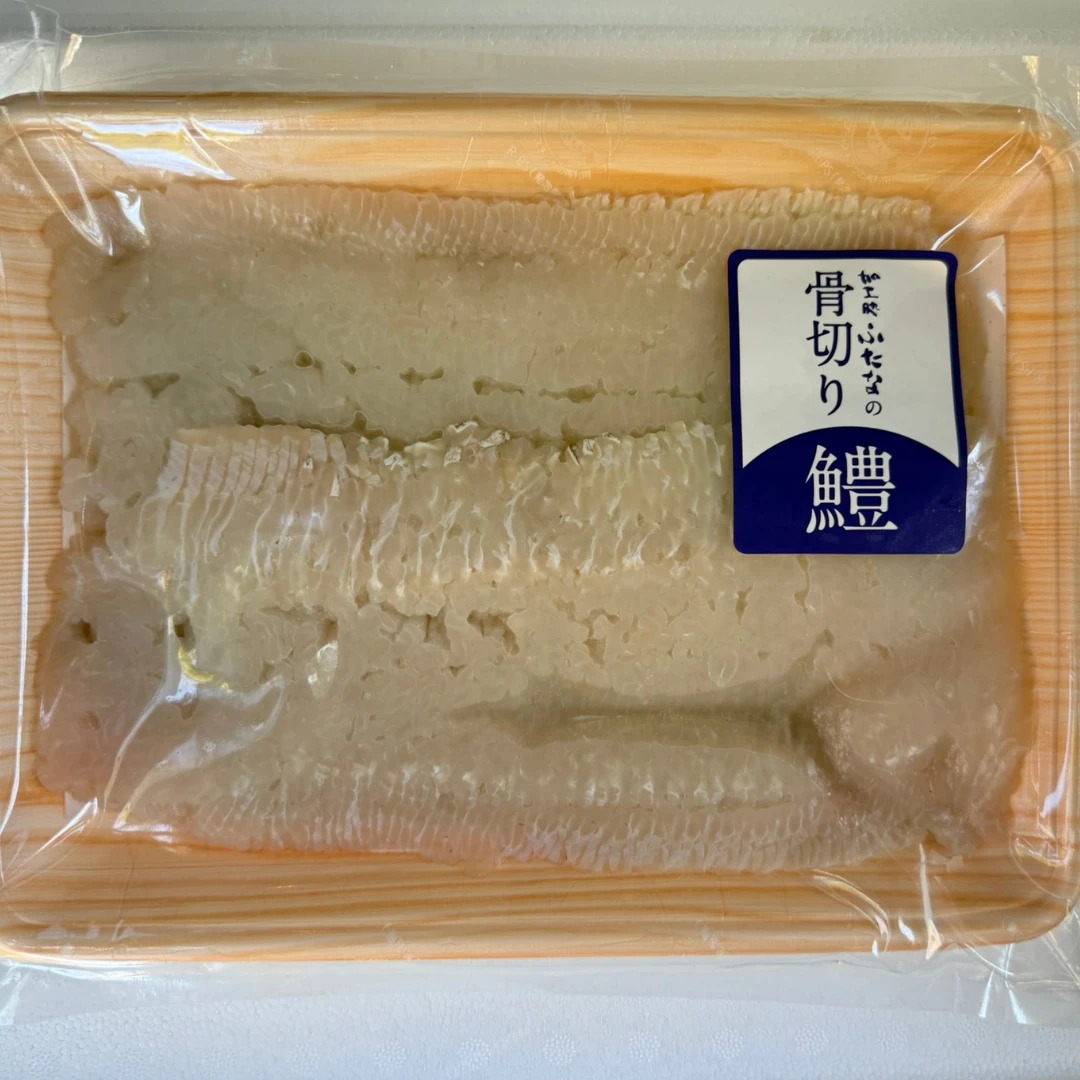
鱧切り身 HAMO - FRESH WILD PIKE CONGER - Muraenesox cinereus
Location
Nagasaki
Size/Weight
200g Pack
Texture/Flavor Profile
Hamo offers a light, airy texture with a subtly sweet, clean flavor. Its flesh is soft yet holds structure when cooked, making it ideal for summer dishes. Once expertly deboned, it melts on the tongue while retaining a pleasing, delicate chew. A true seasonal treasure with refined complexity.
Availability/Seasonality
Primarily available in summer, especially from June to August, when Hamo reaches peak fat content. Sourced from warm coastal waters, its seasonal abundance aligns with Kyoto's traditional summer cuisine. Occasionally available frozen out of season, but fresh is most prized.
About
Hamo (Muraenesox cinereus) is a saltwater pike conger prized for its flavor and culinary heritage. Known for its many fine bones, it requires a specialist technique called honegiri (bone-cutting), where chefs make rapid knife incisions to render it tender and safe to eat. Revered in Kansai cuisine, particularly during Gion Matsuri in Kyoto, Hamo embodies summer refinement.
Preparation
Traditionally served blanched (hamo no otoshi) with plum sauce, grilled with sweet tare (kabayaki), or simmered in clear broth. Its bone-cut form makes it quick to cook—just a gentle sear or blanch is enough. Avoid overcooking to maintain its airy texture.
Nutritional Value
Hamo is low in fat, high in protein, and rich in B vitamins. Its light profile makes it ideal for hot weather and health-conscious meals. A lean, clean seafood option with cultural depth.
Selection and Storage
Choose bone-cut fillets that are glossy and free of any browning. Store chilled and consume within 2–3 days of arrival. Freeze for longer storage, but fresh is always preferred for optimal texture.
Summary
Hamo is a hallmark of refined Japanese summer cuisine. Delicate, airy, and elegant, this expertly prepared conger eel connects seasonal tradition with exquisite flavor. A true culinary ritual from the waters of Japan.
Location
Nagasaki
Size/Weight
200g Pack
Texture/Flavor Profile
Hamo offers a light, airy texture with a subtly sweet, clean flavor. Its flesh is soft yet holds structure when cooked, making it ideal for summer dishes. Once expertly deboned, it melts on the tongue while retaining a pleasing, delicate chew. A true seasonal treasure with refined complexity.
Availability/Seasonality
Primarily available in summer, especially from June to August, when Hamo reaches peak fat content. Sourced from warm coastal waters, its seasonal abundance aligns with Kyoto's traditional summer cuisine. Occasionally available frozen out of season, but fresh is most prized.
About
Hamo (Muraenesox cinereus) is a saltwater pike conger prized for its flavor and culinary heritage. Known for its many fine bones, it requires a specialist technique called honegiri (bone-cutting), where chefs make rapid knife incisions to render it tender and safe to eat. Revered in Kansai cuisine, particularly during Gion Matsuri in Kyoto, Hamo embodies summer refinement.
Preparation
Traditionally served blanched (hamo no otoshi) with plum sauce, grilled with sweet tare (kabayaki), or simmered in clear broth. Its bone-cut form makes it quick to cook—just a gentle sear or blanch is enough. Avoid overcooking to maintain its airy texture.
Nutritional Value
Hamo is low in fat, high in protein, and rich in B vitamins. Its light profile makes it ideal for hot weather and health-conscious meals. A lean, clean seafood option with cultural depth.
Selection and Storage
Choose bone-cut fillets that are glossy and free of any browning. Store chilled and consume within 2–3 days of arrival. Freeze for longer storage, but fresh is always preferred for optimal texture.
Summary
Hamo is a hallmark of refined Japanese summer cuisine. Delicate, airy, and elegant, this expertly prepared conger eel connects seasonal tradition with exquisite flavor. A true culinary ritual from the waters of Japan.